
Rue Maurice Nogues
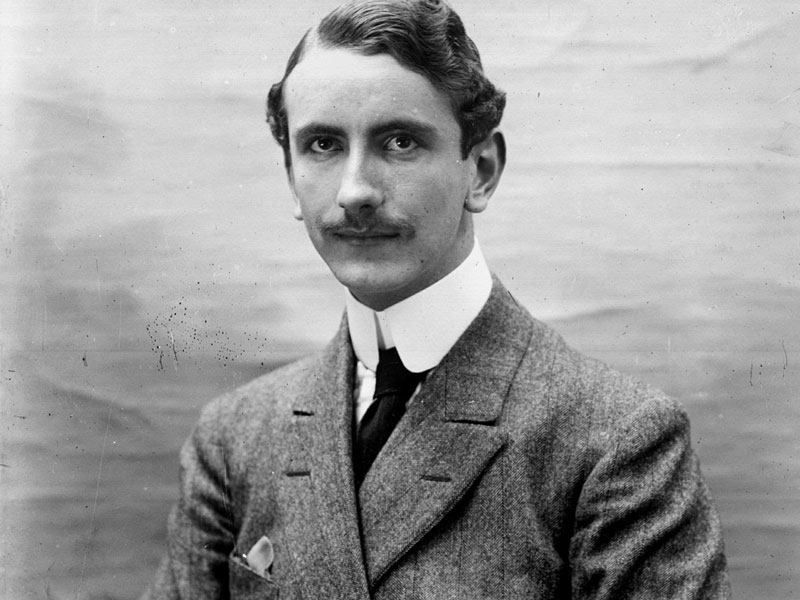
Maurice NOGUES - Adventurer
1889 - 1934
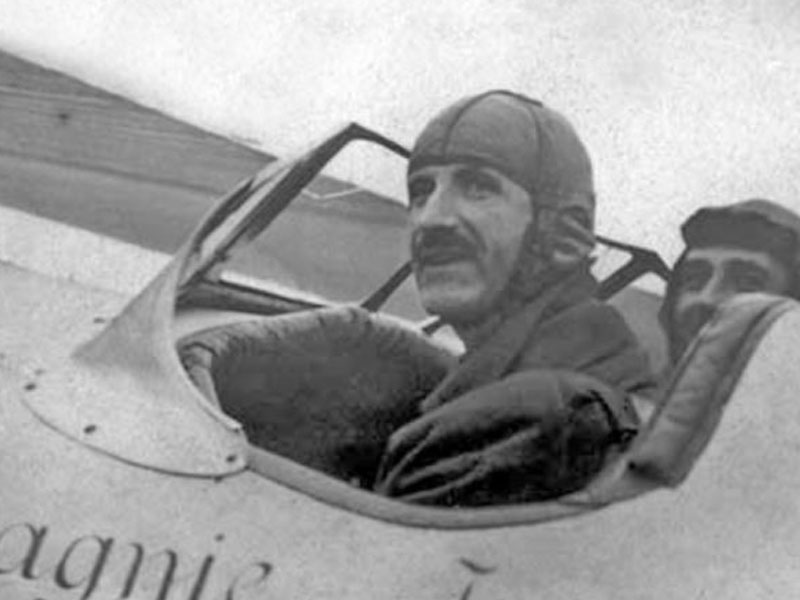
Maurice Noguès was born in Rennes in 1889. After studies, he passed his pilot's license on June 21, 1910 (official date) on a Voisin airplane, but has been taking part in air meetings since April. In 1914, reéformute; he joined the aviation as a mécanician, and passed the military pilot's license in February 1915 before being sent to the VB-107 squadron.
In 1917, he would have refused a position à the General Staff in order to be transferred to the fighter aviation, then considered as a reward. He was transferred to the SPA-73 in September 1917 and took command on March 22, 1918, but was shot down on April 27 after having obtained at least one air victory. Déuteute;finitively reé he entered in June 1922 the service of the Franco-Romanian Company, thanks to Albert Deullin, his comrade and predecessor of the SPA-73 squadron.
Chef
Chief pilot of the CIDNA in 1924 (former Franco-Romanian), he opened new routes régulières to the Middle East. In September 1925, on his return from a Paris-Turkish raid, in difficult conditions, he had to make a crash landing in the Bay of Naples and shortly after his arrival in Paris, he was dismissed from the CIDNA. In 1926, he resumed his flights to the East for the Messageries Transaacute;riennes, then from June 1927 for Air-Union Lignes d’Orient (AULO). In September 1926, he tested the Navigraphe invented by Yves Le Prieur on the Côte d’Azur, and explored the water landing zones of the Mediterranean.
In 1927, he was appointed to the AULO
In 1927, in the company of Georges Hanin, he was for a time approached by Farman to line up for the Atlantic crossing, but he gave it up, it seems, to devote himself entirely to his project for airlines to the Orient. In June 1930, Air-Orient was born from the merger of Air Union lignes d’orient and Air Asie. Shortly after, in 1933, Air-Orient, CIDNA, Air-Union and Lignes Farman merged, then in August, as Aéropostale had been bought out, Air-Orient was created;e, the group gave birth to Air-France, of which Noguès then became deputy general manager in charge of technical management.
In connection with Mermoz, he then turned his attention to the restoration of the African and South Atlantic routes, but on the night of January 14-15, 1934, he was killed in the accident of the Dewoitine 332 Emeraude of which he was a passenger, in Corbigny (Nièvre). His body was buried in Plounévez-Moëdec (Côtes d’Armor), the cradle of his family, carried into the ground by his Air-France comrades, including Mermoz and Pichodou. Moreover, Maurice Nogu is said to be the originator of the Air-France emblem, the seahorse or shrimp. A postage stamp, designed by Pierre Gandon, paid tribute to him in 1951. A cancellation « First day » was then organized à Rennes, his hometown.