
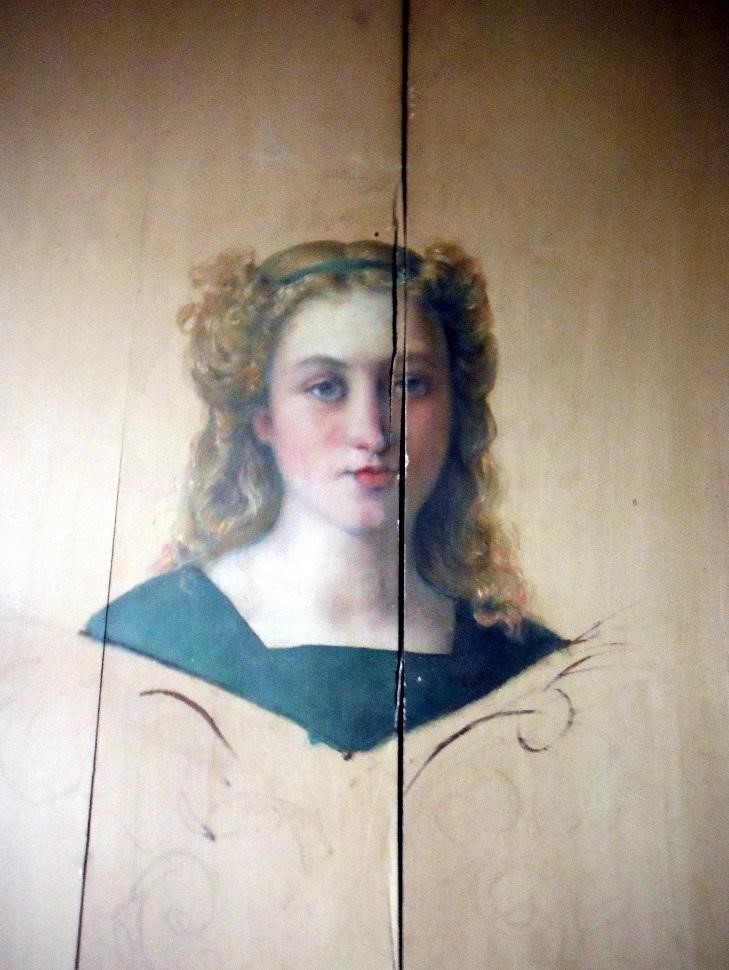

Eugénie RENIQUE - Dancer
Place du 11 Novembre 1918
1780 - 1836
His parents both belonged to the families of receivers of drafts, employees of the Ferme générale, the present-day equivalent of the receivers of the impôts. In 1790, the revolutionaries suppressed the "Ferme générale". The income of the Renique family was affected. Eugénie Renique leaves for Paris at the age of 20 and becomes a dancer at the Opéra. There she met in 1801 the general Andréna (1758-1817) who was then on leave from the army. She became his mistress and their relationship lasted ten years. She shared the years of glory of Masséna and accompanied him on the battlefields, dressed as a man. She shows great courage in a difficult environment. By disguising herself as a man, she breaks a taboo.
To hide their relationship on the camps, she makes a fake marriage with Major Leberton and calls herself Henriette.in 1813, Eugénie Renique settles down in Saint-Amand-les-Eaux near her relatives, quickly joined by her brother Eugéne whom she had made enter the Napoleonic army. She moved to the corner of the rue de Condé (now rue Louise de Bettignies), near her mother and her aunts, who lived in the same street. She had a nice capital which allowed her to buy many houses and lands in Saint-Amand-les-Eaux, Valenciennes, in different towns of the canton and in the Belgian Hainaut.eugene Renique died of a long illness on August 31, 1836 at the age of 56 in Saint-Amand-les-Eaux. She left her entire fortune to the city to establish a hospice for orphan girls, which would be served by the Sisters of Charity. The orphanage, which has now disappeared, will be built on the grounds near the church of Saint Martin and will be named Renique. It is, today, the Ehpad Estréelle.