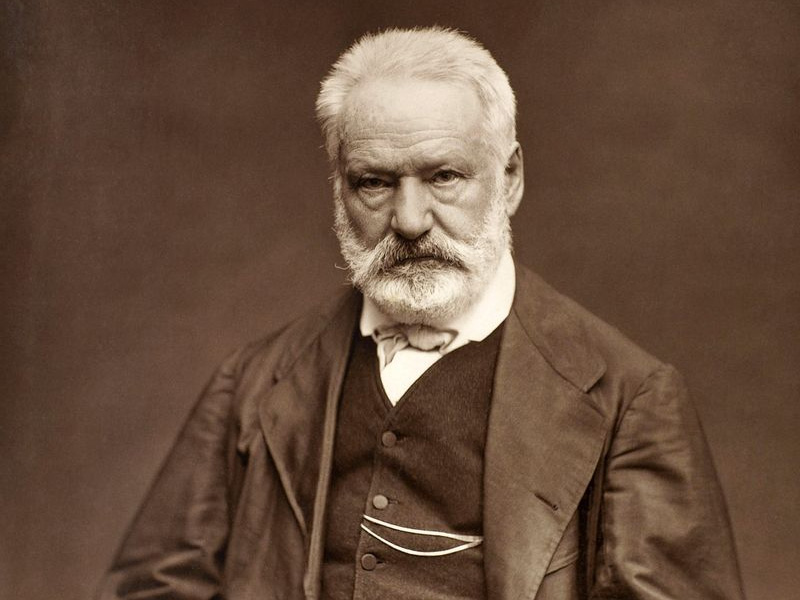
Victor Hugo

Avenue Victor Hugo
Victor HUGO - Writer
1802 - 1885
Romantic author of novels, poems and plays, Victor Hugo was also involved in politics. In his books and speeches, he defended peace and the break with archaic models of society. Victor Hugo was born on February 26, 1802 in Besançon. He was the last child of a family of three boys. His father Léopold was a general in the Napoleonic Empire. On October 12, 1822, Victor Hugo married Adèle Foucher, a childhood friend. Two years later, she gave birth to their first child, Léopoldine. They will have five children in all. Victor Hugo is one of the greatest poets, writers and playwrights of the 19th century. He is the famous author of Les Misérables, Notre-Dame de Paris, Hernani and Les Contemplations. From poetry, to novels, to plays, he is the great figure of the romantic movement. Already during his lifetime, he was recognized by his peers as well as by the French people. His actions, both literary and theatrical (breaking with the rules of classical theatre, the advent of Romanticism...) and political and social (fighting against the death penalty, for peace, in favour of the status of women, denouncing the clergy...), played a considerable role in his time. Like La Fontaine or Molière, Victor Hugo's works enrich the French cultural heritage. His daughter Léopoldine died in 1843 in a boating accident. This tragedy affected Victor Hugo greatly. Some believe that this event is the reason why he turns to politics. On February 8, 1871, he was elected to the National Assembly. In 1876, he was elected senator. One of his first speeches was a plea for an amnesty for the communards. Age did not dry up his pen. At 75, Victor Hugo continued to write and published the Légende des siècles and the Art d'être grand-père (1877). For his 80th birthday, a crowd estimated at 600,000 people marched past his windows. On May 22, 1885, Victor Hugo died of pulmonary congestion at the age of 83. The hearse "of the poor", as he had wished, carried his coffin to a national funeral. His remains were displayed under the Arc de Triomphe for one night, then taken to the Pantheon. A crowd of two million people followed the procession. Delegations from all over the world came to pay their last respects.