
Place de la Castre
La tour du Suquet
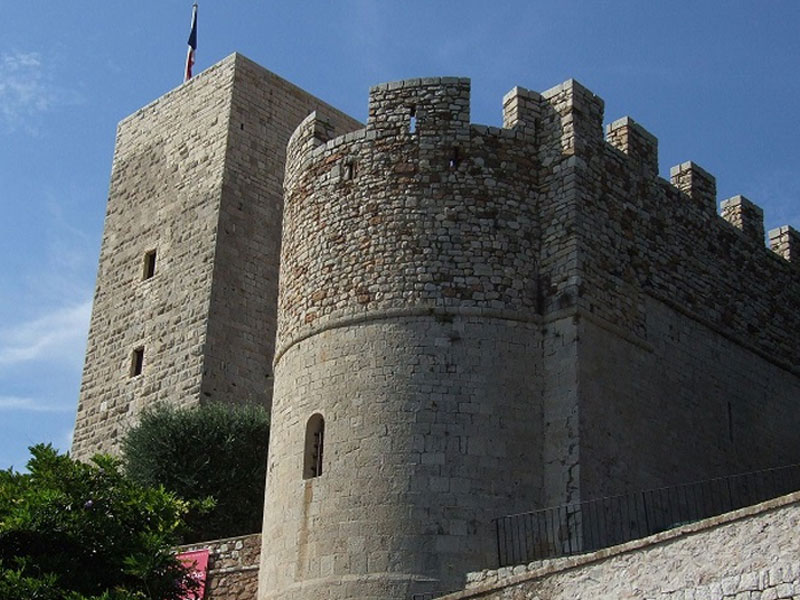
The tower of Suquet is a remnant of the fortifications, dating from the XIème siècle. In the Middle Ages, the power of the Counts of Provence relies on fortifications that serve as much to guarantee attacks from the sea that show its power to the people and local nobility, reluctant to accept the federal order. Among these strongholds, is, at the top of the hill of Suquet, a Castellum Marcellini (Marcellin's castle). Guillaume Ier le Libérateur, after his resumption in hand of the count of Provence, gives, in 960, what was still only a très modest castrum à Rodoard, head of a branch of the powerful family of the house of Grasse, with the fief of Antibes of which Cannes is a part, in reward of his fidelity. Around the year 1030, Guillaume-Gruette, son aîné of Rodoard, enters the orders and cède a part of his lands à the abbey of Lérins. The act of donation is at the same time the act of creation of the territory which will become the commune of Cannes. It mentions a castle on the hill of Suquet, in the center of a new agglomeration that is developing.
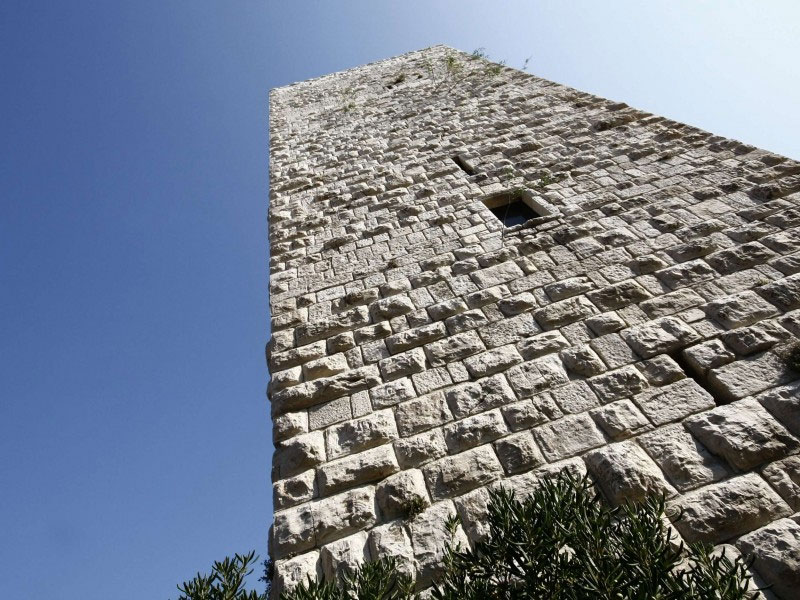
About 1080, the abbot of Lérins Aldebert II undertakes the construction of the great tower of Suquet to shelter the site à from attacks by corsairs and Saracens. In 1131, the donation was confirmed by the Count of Provence, an act that the Pope himself sealed. A signaling system by lights between the tower of the fortified monastery of Lérins and that of Suquet is installed in 1327. The tower of Suquet is completed only three centuries later in 1365 by the abbot Jean de Thornafort. With its twenty two meters of height it allows to watch the harbor of Cannes. In 1178, the Castellum Marcellini was named Castellum Francum (Frankish castle). A real festive habitat with a castle, houses, a hospital, churches including Notre-Dame-du-Puy which, after the construction of Notre-Dame-d'Espérance, will become the Sainte-Anne chapel. This site is then a castrum, ie a fortified village, grouped around the castle (now the Castre Museum). In the eighteenth and nineteenth centuries of sanitation and road works lead to the destruction of part of the ramparts to allow the piercing of the road to Italy, the current rue Georges-Clemenceau, and the rue du Mont-Chevalier. The castle, partially destroyed, sold as a national asset during the Revolution became, in 1878, a ceramic factory La faïencerie d'art du Mont-Chevalier. In 1919, the commune of Cannes installs there the music of the Castre.