
Clocher triangulaire et couvent Saint François
Clocher triangulaire et couvent Saint François
Corsica's high spiritual, historical and heritage site
Founded in 1474 by some twenty monks, the couvent Saint-François de Corte (Franciscan Order of Observance) was for centuries one of the island's most influential religious centers, after that of Bastia. Construction, orally authorized by Pope Eugene IV as early as 1445, took nearly forty years. Franciscans can be recognized by their brown frock, scapular and bure hood and their rope belted with three knots, symbolizing the vows of poverty, chastityand obedience.
A place inhabited by saints
Two of Corsica's great religious figures stayed here:
- Saint Alexandre Sauli (1535-1592), Barnabite (Order of Saint Paul) born in Milan and bishop of Aléria from 1570 to 1591, nicknamed the apostle of Corsica for his commitment to evangelizing the island, training clergy and building churches. Canonized in 1904.
- Saint Théophile de Corte (1676-1740), Franciscan (Order of Saint Francis of Assisi) born in Corte, he took his vows in this convent on September 21, 1693. The only Corsican saint, he is reputed to have been a healer and founder of numerous "ritiri": convents where the Franciscan rule is strictly applied (recollection in prayer, silence, penance, fasting). He is also known for having saved the village of Zuani from a punitive expedition in 1732 by interceding with the Prince of Württemberg. Saint Theophilus was canonized in 1930.
A high point in Corsican political history
In the XVIIIᵉ century, the convent was at the heart of the Paolinian state. Pascal Paoli resided here and several consults (legislative assemblies) were held here between 1755 and 1769. Also debated were the judicial system (Ghjustizia Paolina), island currency and even the war against France decided on May 22, 1768. It's possible that the Corsican constitution and anthem were adopted here. It was also here that the Virgin Mary was probably proclaimed patron saint of Corsica in 1735.
From convent to hospital, then to university
In 1803 (year XI of the revolutionary calendar), when Napoleon Bonaparte was First Consul, the army planned to convert the convent into a hospital. Confiscated after the Revolution, the site passes through several hands: bought by the Arrighi de Casanova family, who donates it to the Church, then transferred to the commune after the separation of Church and State. Today, the site has a university vocation: it houses student accommodation in particular, and the Faculty of Science is built there on the former convent grounds.
The triangular bell tower: a unique vestige
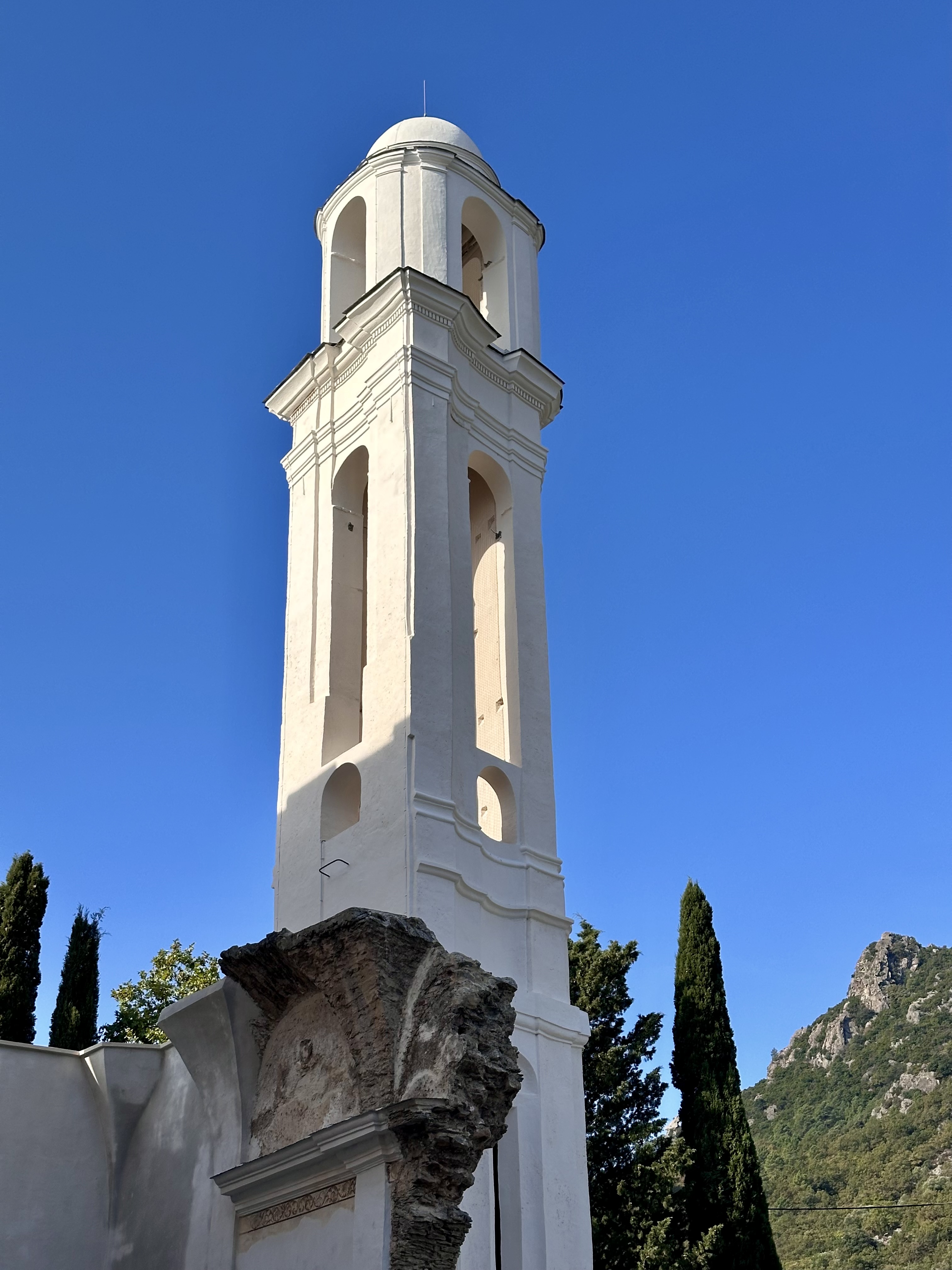
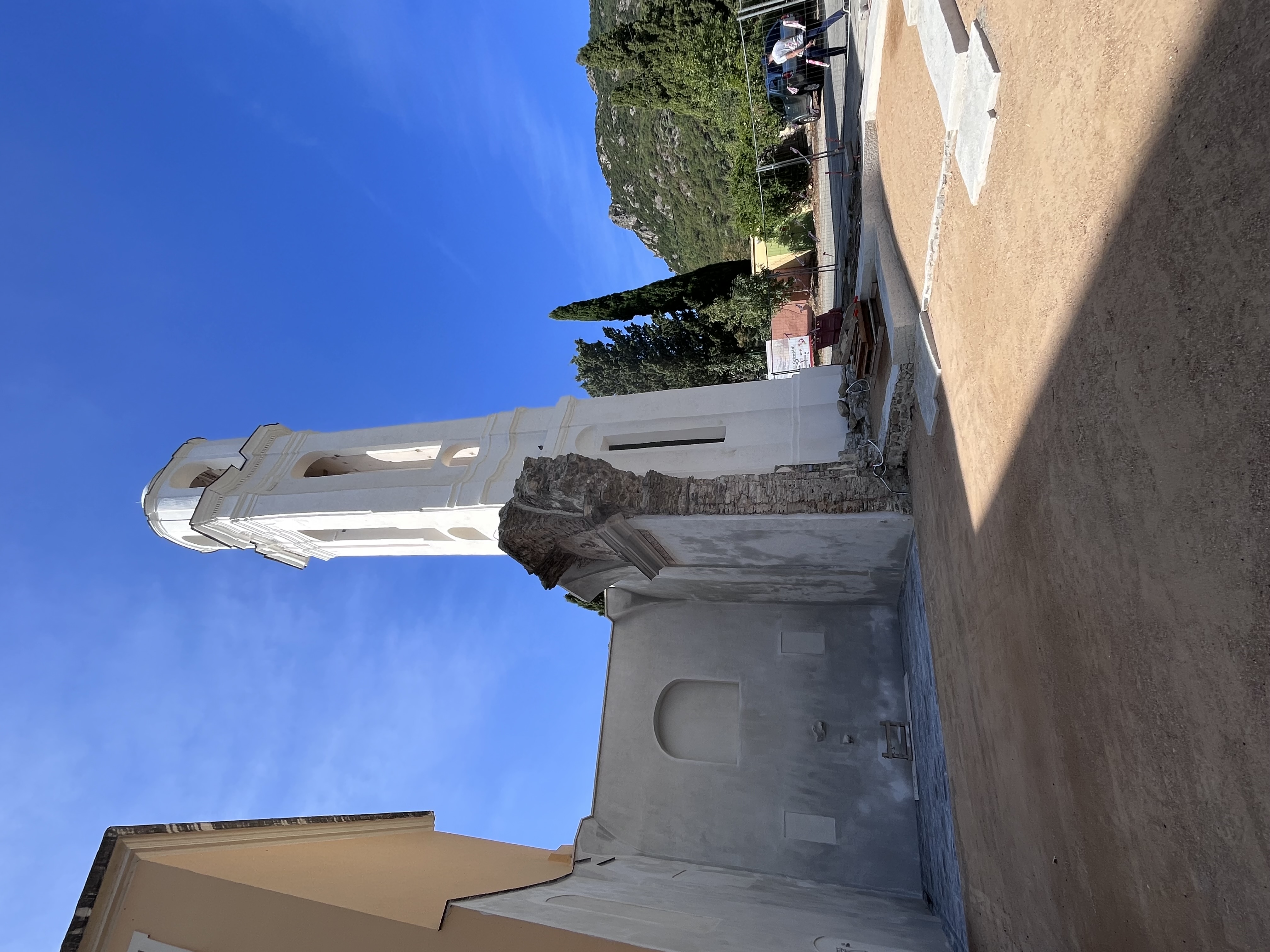
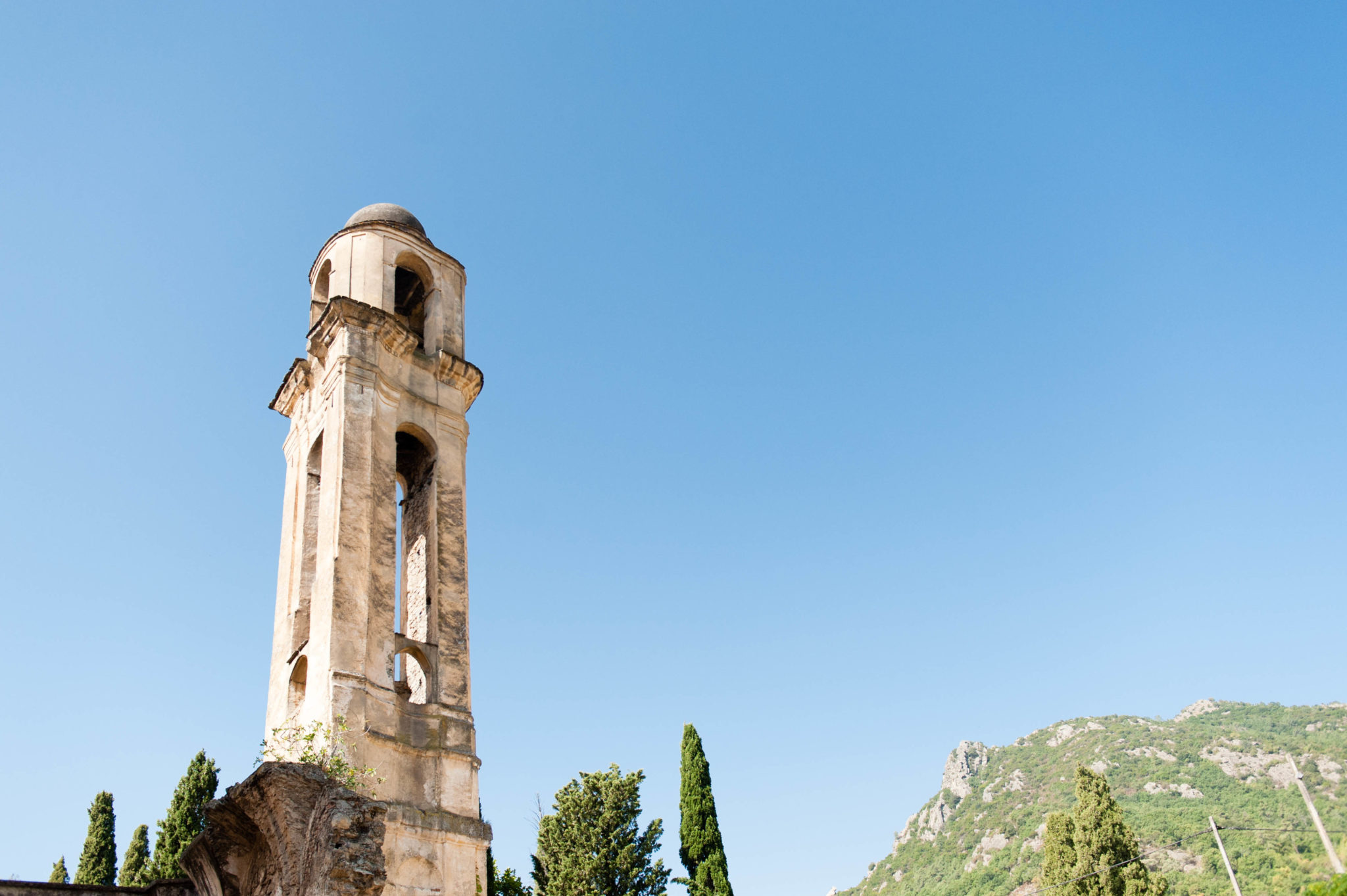
The last visible witness to the convent's former church, the triangular bell tower of Corte, built between 1677 and 1717, is an exceptional architectural feature. The current adjoining building retains vestiges of the convent (corridors and vaulted rooms). This specific type of bell tower is found mainly between Provence, Piedmont and Liguria. There are fewer than fifty, including four in Corsica: in Corte, Murato, Oletta and Olmeta di Tuda. Its singular appearance is due to an isosceles trapezoidal plan, whose front pilaster creates the illusion of a triangular shape. This makes it a rare case that can be compared to some of Piedmont's Baroque triangular bell towers. The bell tower rises to more than 25 meters and is composed of three levels :
- a high, sturdy base,
- the main level pierced by three arcades for the bells, crowned by a large cornice
- a lantern topped by a cupola. The unfinished lantern could post-date the bell tower. It also had bells. The high-quality Baroque decoration, with curves and counter-curves, shows that its author was skilled.
Restoration (2023-2024)
Directed by heritage architect Jean-Manuel Paoli, the recent restoration of the bell tower respected the original materials and the patina of time :
- preserving the old renderings covered with a white whitewash slightly tinted by the ochre dust of the Sahara, applying a whitewash to the new parts then unifying the new and old parts with a slightly ochre patina,
- equipping the lantern with a cornice and capitals
- marking the location of the former chapels on the ground.
To know (see plan)
The first floor of the convent was once dedicated to community life: church (A), cloister (G), refectory (2), chapter house (3). The monks' cells were located upstairs.