
Rue Roland Garros
Roland GARROS - Adventurer
1888 - 1918
As surprising as it may seem, the story of the man who gave his name to one of the most mythical stadiums on the tennis court is not so well known. And we must admit that it is quite unexpected that the name of an aviator - for this reason the name Garros has been passed on to the post office - is associated with a site where tennis is played. It is one of the historical originalities of the French Open and a fitting tribute to a man who was a pioneer and a hero.
Roland Garros hardly ever played tennis, even though he was an accomplished sportsman. In his youth, he distinguished himself in soccer, rugby or cycling, the little queen even allowing him to recover respiratory capacities weakened by pneumonia at the age of 12.
But for the Garros, it was not enough
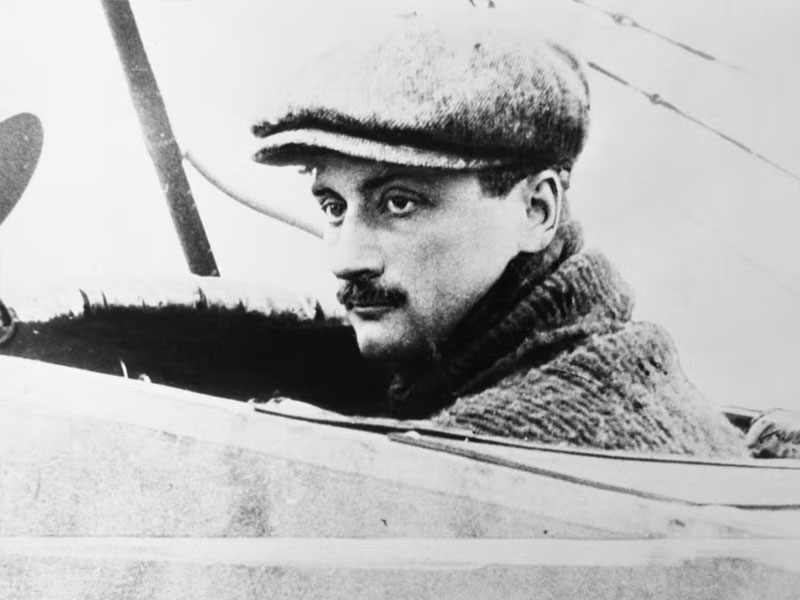
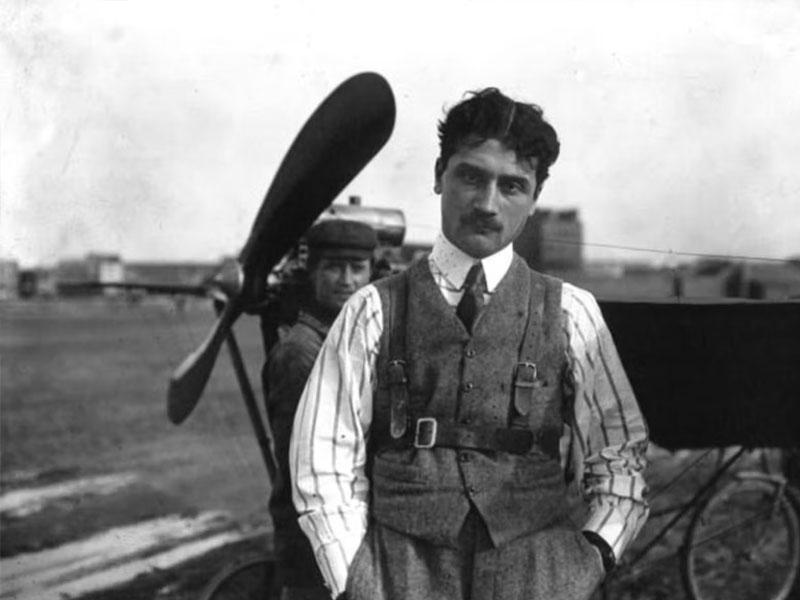
But for this boy born in Saint-Denis de la Réunion on October 6, 1888, a graduate of HEC, a business creator at the age of 21 - a car dealership not far from the Arc de Triomphe - the shock of his life occurred in August 1909. Invited to Champagne by a friend, he attended his first meeting with nothing and fell completely under the spell of these crazy machines. As Garros never does anything half-heartedly, he immediately buys an airplane, learns to fly it on his own, and then passes his patent.
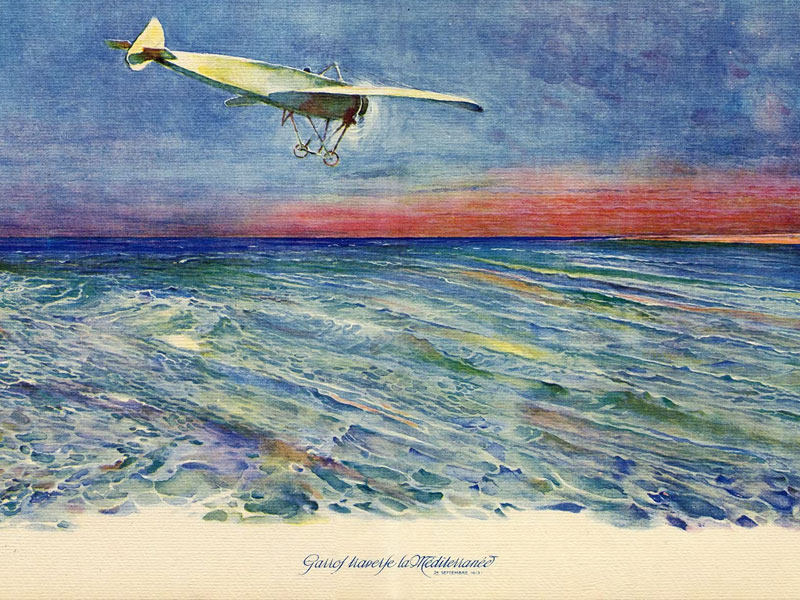
Two years after the birth of this passion dèvorante, the sailà which beats déjà a first record of altitude, September 6, 1911, with 3,910 mètres, after having décollé of the beach of Houlgate. Then the races and the air meetings follow each other. Garros thunders by his audacity and his inventiveness. He quickly became a star of the discipline. Hundreds of thousands of people in Europe and South America flocked to see his evolutions. Roland Garros saw even bigger things and wanted to fly over the seas. He set himself a new challenge: to cross the Mediterranean, something never seen before in the history of the world. On September 23, 1913, he will link Saint-Raphael to Bizerte on his Morane-Saulnier monoplane. An eight-hour pre-flight flight.
Part 1
Leaving at 5:47 a.m., with 200 liters of gasoline and 60 liters of castor oil on board, Garros, despite two breakdowns that this mechanical genius quickly solved, landed in Tunisia at 1:40 p.m. after having flown some 780 kilometers. It remains him five liters of fuel. This feat makes him one of the darlings of Paris. Jean Cocteau, among others, became his friend. The poet and filmmaker, whom Garros sometimes flies, will even write a text for him, "Le Cap de Bonne Espérance".
At the time of his death, Garros was the only one who had the courage to fly
When the First World War broke out, this pianist became involved in the conflict. At the time, the armament of the aircrafts was almost non-existent. The French Open's founder and inventor once again made a difference: he developed the first single-seat fighter with a machine gun that could fire through the air. A revolution. He returned to the front equipped with his new firing device.From April 1915, Second Lieutenant Garros recorded three consecutive victories in fifteen days but was hit by German flak over Belgium.
Forced to land, he was taken prisoner before he could fire the plane. His invention thus fell into the hands of the enemy. It was not until three years later that this strong man was again able to escape, and was dressed up as a German officer. But the captivity has seriously deteriorated his health. He was caught by his myopia and had to get glasses made in secret in order to keep the right to fly. Even if Clercq wants to keep him as an advisor, Garros is obstinate and goes back to the fight. His audacity, this time, will be fatal to him: he is shot down on October 5, 1918 over the Ardennes, not without having won a fourth duel.