
Avenue Cernuschi
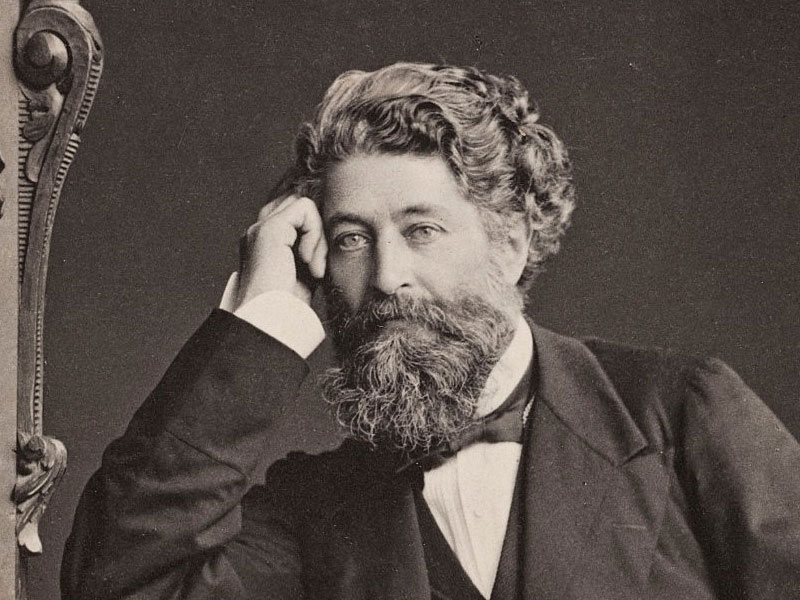
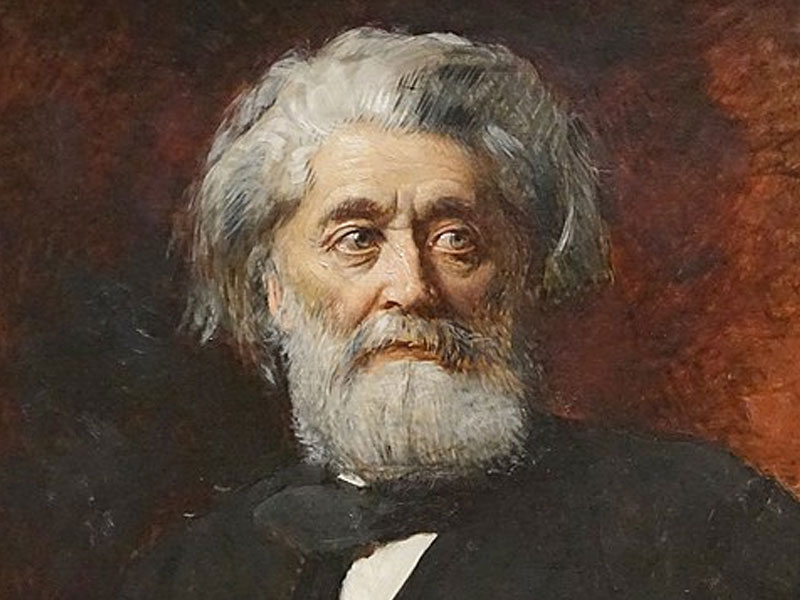
Henri Cernuschi - Journalist
1821 - 1896
It is a tribute to three Milanese brothers in love with Menton. Henri (Enrico) Cernuschi, defined by Enrico Marinelli as "the St just of the Revolution and the Italian risorgimento", was born in 1821 in Milan. Doctor of Law, "carbonaro", he actively participated in the "five days of March 1848" in Milan against the Austrians, was a member of the council of war, and in December of the same year, he represented Lombardy in the committee of the Italian constituencies formed in Rome to favor the creation of a constituent assembly. Arrested after the intervention of the troops of Napoleon III, he was incarcerated in the castle St Angelo pontifical prison. Then authorized to settle in Paris, he began a modest career as a bank clerk while indulging in some writing and copying. A few years later, he was a management consultant, before embarking on a personal financial operation that would make his fortune. A great traveler, he brought back from his travels in the Orient an extraordinary collection of Chinese and Japanese art objects that he bequeathed to the city of Paris and that can be seen at the Cernuschi Museum in the Parc Monceau. He was also the author of numerous economic and financial works. Expelled from France in 1870 for "anti-imperial activities", he returned after the fall of the Empire, participated in the Commune, and became a naturalized French citizen. He died on May 20, 1896 in Menton and was cremated in Père-Lachaise, leaving the memory of a Republican, a lover of justice and freedom, and a great European before his time. Attilio Cernuschi, his brother, engineer and banker, settled in London and came to spend his vacations in Menton before 1870. He fell in love with it and acquired the villa of Vellon and several adjoining plots of land on the hill of the Serres de la Madone (today they constitute the vacation center of the Latournerie miners, open since 1958). He also had the large private road built which, in twenty-two twists and turns, leads from Borrigo to the top of the hill. He died in 1894. The third brother, Constantine, born in 1825, was an eminent engineer who built the railroad line between Ventimiglia and Genoa and other lines in Spain and the Andes. In 1849, he had fought for the defense of Venice. He came to Menton after the death of his brother Attilio and gave the ten-hectare estate its present form. He also had the road modified in its upper part, using unemployed workers, following the earthquake that devastated the region in 1887. He died in 1905, bequeathing to the city of Menton 10,000 francs for his social works.