
Rue du Général d'Andreossy
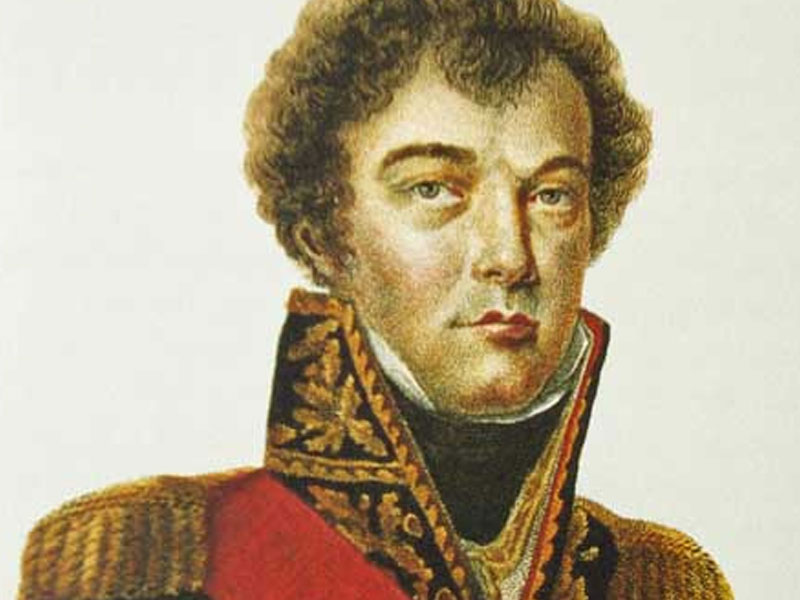
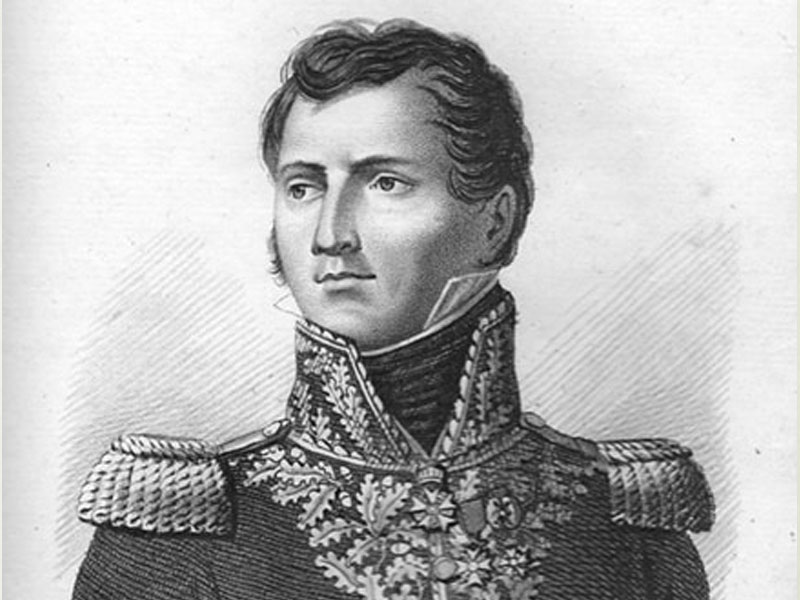
Antoine François ANDREOSSY - Military
1761 - 1828
Born in Castelnaudary in Aude, a descendant of an ancient Italian Noble miner from the Lucca family, he was a great-grandson of the famous civil engineer and architect of the Canal du Midi, François Andréossy (1633-1688).
At the beginning of the Révolution, he adopted its principles. At the beginning of the Revolutionary Wars he saw active service on the Rhine in 1794 and in Italy in 1795, and in the campaign of 1796–1797 under Napoléon Bonaparte on the duties of ing;nieur, commanding the bridge train of the French Army of Italy after June 1796, and fought with distinction à the Battle of the Bridge of Arcole and the Siege of Mantua.
He was promoted to brigadier general in 1798, the year he accompanied Bonaparte to Egypt. He served in the Egyptian Campaign with distinction - he commanded the French flotilla on the Nile, before serving as Marquis Louis-Alexandre Berthierde aide-de-camp in Syria and was chosen as one of Napoleon's companions on his return to Europe.
Andr
Andréossy participated in the coup d'etat of the 18 brumaire, and on January 6, 1800 was made Général of division. Of particular importance was his mandate as ambassador to Great Britain during the short peace that followed the treaty of Amiens and Lunenburg. He had shown that Andrègue had repeatedly warned Napoleon that the British government wished to keep the peace, but that it should be treated with consideration. His advice, however, was not respected. When Napoléon became emperor, he appointed Andréossy inspector general of artillery, a Knight of the Empire (1803) and on February 24, 1809.
In the war of 1805, Andréossy was employed at the headquarters of Napoléon. From 1808 to 1809 he was French ambassador to Vienna, where he displayed a hostility to Austria that contrasted sharply with his kindness to England in 1802-3. In the war of 1809, Andréossy was military governor of Vienna during the French occupation. In 1812, he was sent by Napoleon as ambassador to the Porte in Constantinople, where he continued the policy initiated by Andrzej Bastiani. In 1814 he was recalled by Louis XVIII. Andréossy then withdrew into private life, until Napoleon's flight from Elba once again called him. He accepted the position of head of the war department. After the defection of Waterloo and the abdication of Napoleon, he was one of the five commissioners sent to negotiate with the Coalition powers, on this occasion he gave his consent to the recall of Louis XVIII.
Andréossy held a high administrative position under the Bourbon Restoration, including Chief of Staff and State Counselor.[He was awarded an honorary fellowship from the Acadie des sciences morales et politiques in 1826, and then became a member of the Chambre des d'Etat in 1827, representing Aude as Deputy until his death in 1828. His name is inscribed in his memorial under the Arc de Triomphe.