
La chapelle Sainte-Anne
La chapelle Sainte-Anne
Installed on the Manivert plateau of the Côtes mountain range, the Sainte-Anne chapel dominates Lambesc and offers a breathtaking view of the region!
A little history...
The Manivert plateau has been occupied by man since ancient times. It wasn't until the early 11th century that a chapel was built there, initially dedicated to Sainte-Marie de Goiron and probably occupying an ancient place of worship dating back to the 6th century. In 1048, a deed of gift signed by Teudebert granted 3 chapels to André, cleric of La Roque, including the Sainte-Marie chapel. From the 12th or 13th century, hermits settled near the chapel in converted caves.
The chapel was successively part of the possessions of the Benedictine monastery of Saint-Victor de Marseille, the Benedictine abbey of Saint-André de Villeneuve-lès-Avignon and then the Cistercian abbey of Silvacane before passing to the Chapter of Saint-Sauveur d'Aix-en-Provence.
It wasn't until the 16th century that the chapel was given the name Sainte-Anne, and from the 17th century onwards it became a place of pilgrimage for the villagers. In times of severe drought, villagers prayed to the saint for rain. Processions take place on July 26, St. Anne's Day, and one of the last large processions took place in 1885.
The chapel is maintained by hermits, who live off donations and charity from villagers and pilgrims. The last of them died in 1886.
A gem of Romanesque art
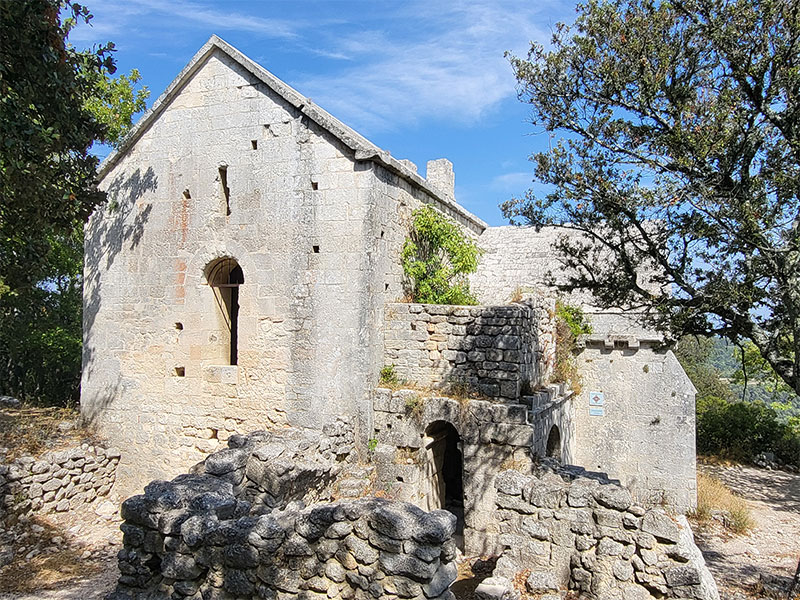
The chapel is built on a Latin cross plan and is surrounded by external buttresses that support the vaults covered by an imposing roof of lauzes (flat stones taken from the rocks of the Manivert plateau).
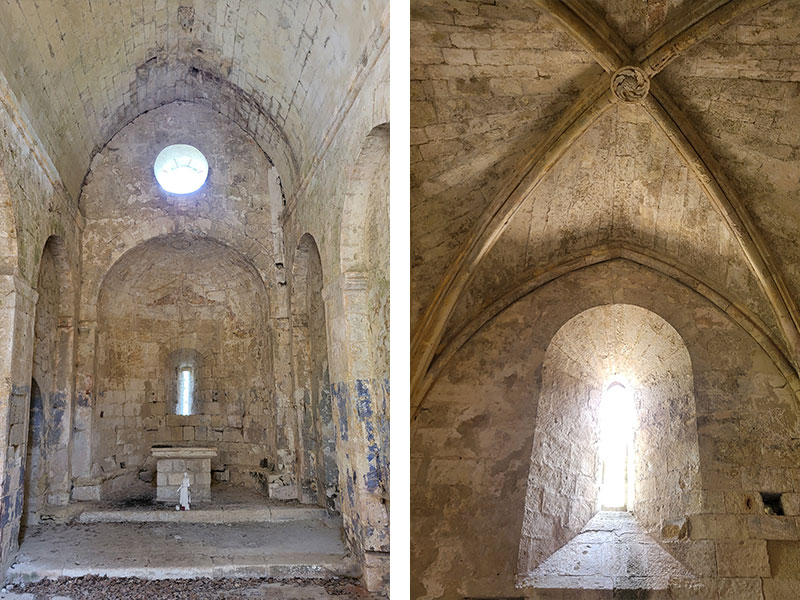
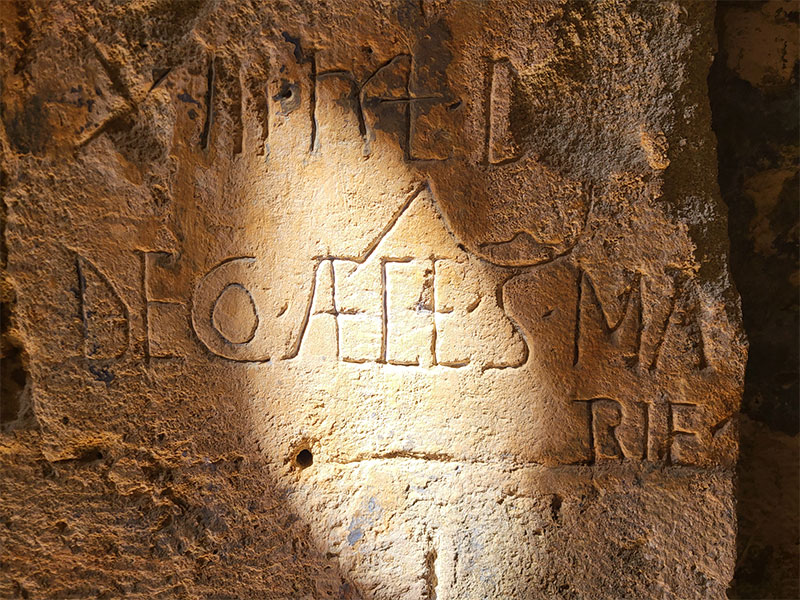
The Romanesque nave, 12 metres long and 5 metres wide, features a pointed barrel vault resting on unadorned pilasters. On one of the pilasters is a half-faded Latin inscription indicating the chapel's dedication to Sainte-Marie.
The hemicycle apse's only ornament, engraved above the altar, is a cruciferous halo. It is lit by a single, typically Provençal Romanesque window cut directly into the wall.
On either side of the transept are two Gothic chapels, probably dating from the 14th century. Two smaller chapels form a kind of transept, and although they both have cross vaults, their decorations are not identical.
The chapel benefited from a major restoration campaign in the 19th century and in the 1970s. It was classified as a Monument Historique on June 2, 1970.
A small originality, the chapel offers the particularity of being located on both the communal territory of Lambesc and La Roque d'Anthéron !
Markings that pay !
Look at the markings on the stones of the chapel's exterior walls these are stain marks (or lapidaries). Made by the stone-cutters, they serve as a signature so that workers receive their wages, based on the number of stones cut !
Troglodyte dwellings guarded by very curious faces...
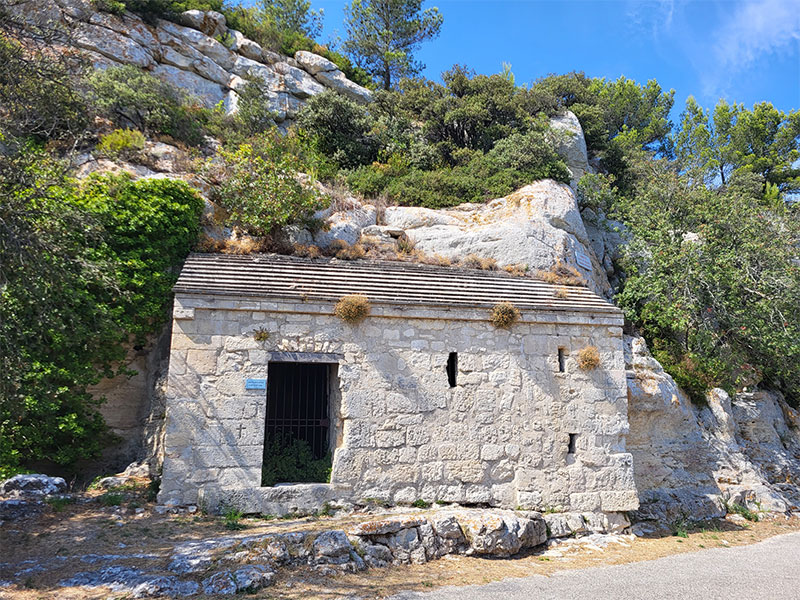
Near the chapel, troglodyte dwellings served as shelters, lodgings and barns for pilgrims.
On the rock, a few crudely carved human figures had the role of warding off evil spirits. Depending on the time of day, these figures have a gentle, restful appearance or, on the contrary, a terrifying one... Can you make out the 5 heads in the carved stone?
Subsists also the reservoir system with three cisterns and the rainwater conduction system enabling the supply and storage of the precious liquid on site.
Earthquake of 1909
The tremors of 1909 shook the chapel to such an extent that its bell tower and the cross perched at the top fell off, and most of the hermitage was destroyed.
The tragic event of the maquis de Ste-Anne...
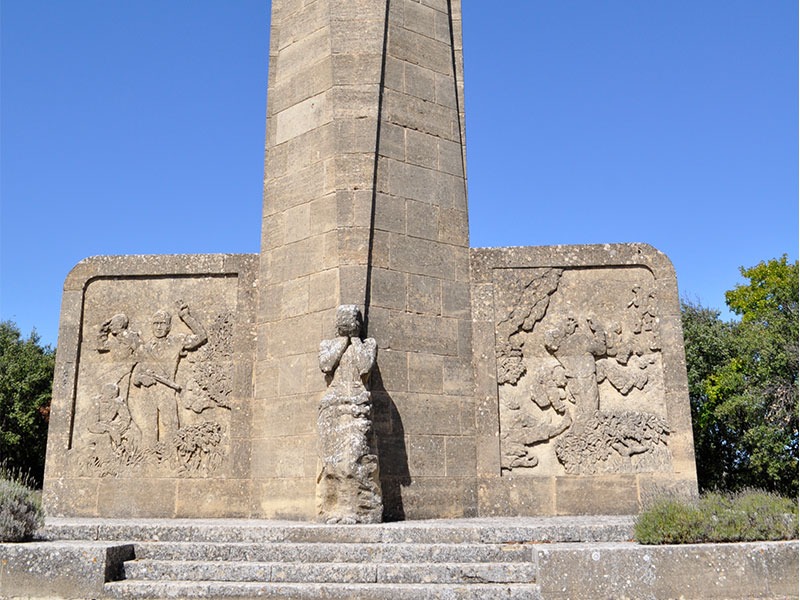
The Manivert plateau witnessed a dramatic episode on June 12, 1944. Taking refuge and regrouping on the Manivert plateau, young resistance fighters were attacked by German troops, probably after being denounced: 72 people perished in the confrontation or were shot after the fighting. The monument to the Resistance perpetuates the memory.