
Duc de Padoue -
Duc de Padoue
Jean-Thomas Arrighi de Casanova: the Duke of Padua, an imperial destiny born in Corte
Born in Corte on March 8, 1778 and died in Paris on March 22, 1853, Jean-Thomas Arrighi de Casanova is an emblematic figure in Napoleonic history. Born into an ancient Corsican noble family, the Arrighi - descendants of the Colonna Cinarchesi - he is also linked to the famous Bonaparte family: his mother is the first cousin of Letizia, Napoleon's mother. The ties between the two families were close: in his youth. Charles, Napoleon's father, even stayed with his family at the Arrighi family home in Corte, just across from the Palazzu, Pascal Paoli's place of command.
A daring soldier, wounded several times in battle, he was nicknamed "Le Balafré" ("The Scarred One"). In 1808, he was promoted to major general. Faithful among the faithful, he accompanied Napoleon during the decisive moments of the Empire. In 1815, during the Hundred Days, he was appointed Governor of Corsica with full powers. But when the Emperor fell, he was forced into exile in Lombardy.
Retired from public life between 1820 and 1849, he devoted himself to his family at his château de Courson, near Paris. When Prince Louis Napoléon Bonaparte became President of the Republic in 1848, he was showered with honors; he was a symbol linking Napoléon III to Napoléon I, but he could not, to his great regret, obtain the marshal's baton, being already retired. He was elected deputy for Corsica in 1849, then Senator in 1852. He was then appointed Governor of the Hôtel des Invalides. His name proudly appears on the Arc de Triomphe in Paris.
A hero honored in Corte
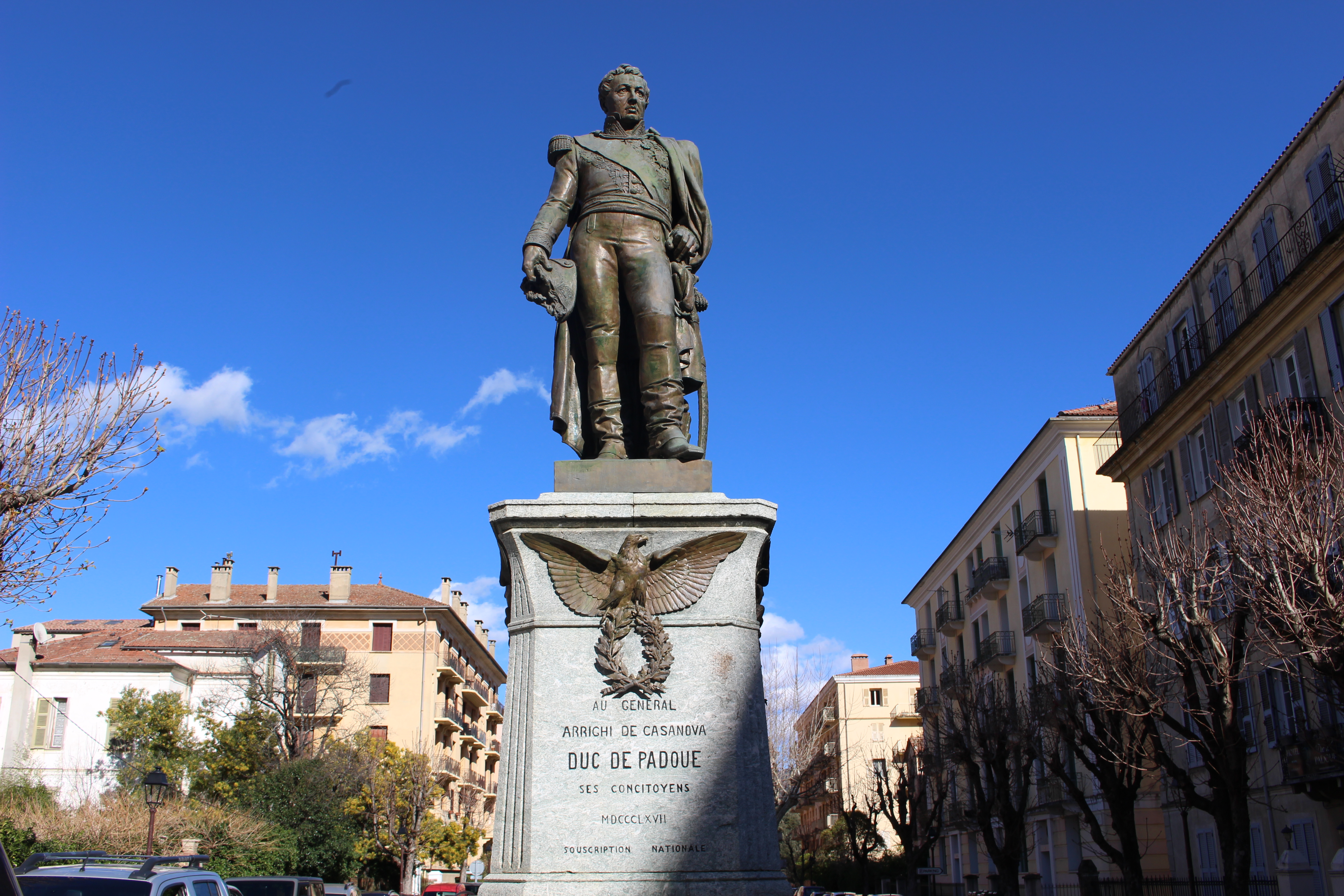
As the Second Empire sought to capitalize on the Napoleonic legend, numerous statues commemorating the local glories of the Grande Armée were erected. On November 20, 1862, the Corte municipal council decided to erect this statue. A national subscription was launched in 1865, with Napoleon III personally taking part. The project was encouraged by General Vaillant, Marshal of France, Minister of War and Minister of Fine Arts.
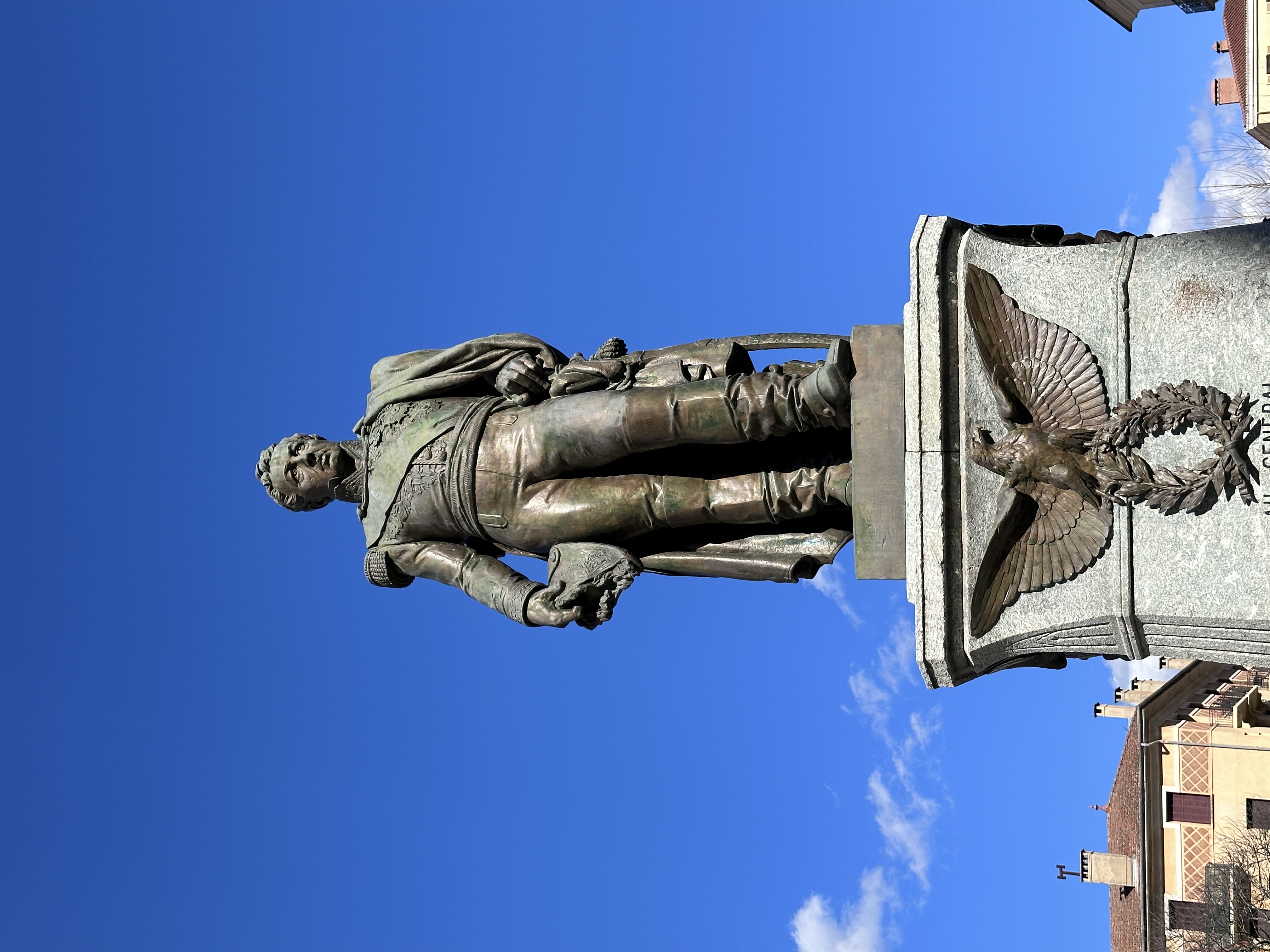
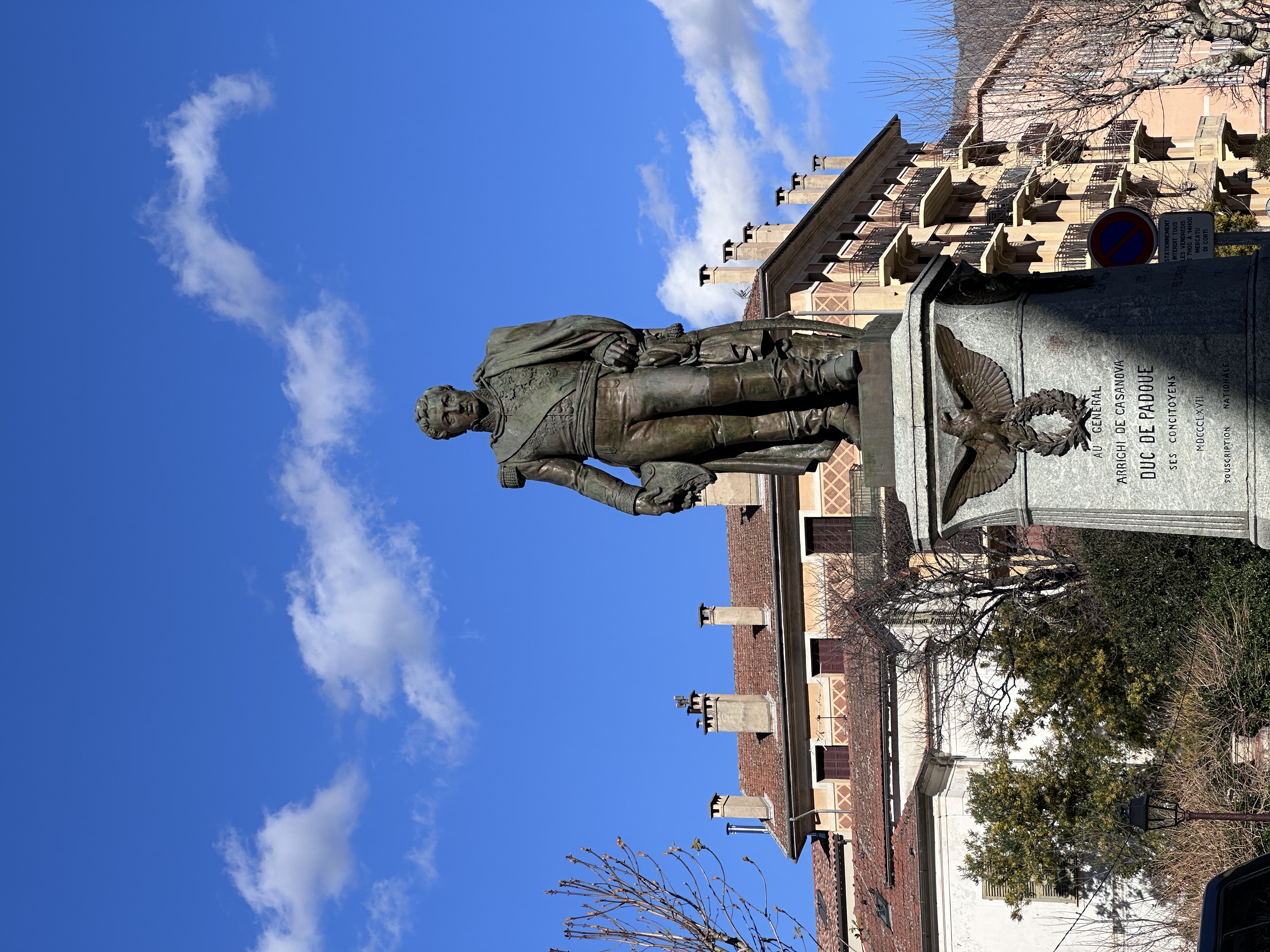
This bronze statue, cast in the workshops of foundryman Victor Thiebault, is the work of sculptor Auguste Bartholdi. It is one of his early works. bartholdi's 2 masterpieces are the Statue of Liberty Enlightening the World, in New York, and the Lion of Belfort. While the Duke was rather frail, Bartholdi wanted to embody, in the man of strong stature, the character of the military hero of absolute fidelity, the man of a single oath.
The statue rests on a base of greenish granite, the protogine, composed of grayish quartz, whitish feldspar and greenish chlorite. Quarries are located in the Restonica, Tavignanu and Scala di Santa Regina valleys in the Niolu region. The monument's pedestal is in Restonica marble. The paving on the floor is marble of unknown origin.
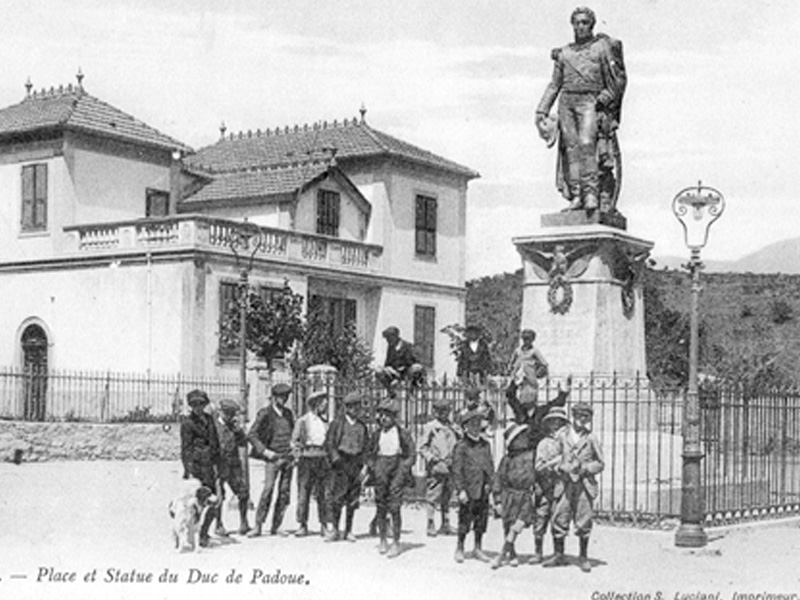
Inaugurated in 1868, the statue marks the widening of the Cours Paoli to the Place Padoue. The space was created using land donated by the Duke's cousins, the Mariani family.
This statue of the Duke of Padua stands proudly on the eponymous square, a stone's throw from today's town hall. It tells the story of a part of imperial history, deeply rooted in Corsican soil.
Two memorable feats of arms
- Salieh, 1798 : In Egypt, Arrighi receives a saber blow to the head during a Mamluk attack. His tricorn deflects the blade and saves his life.
- Saint-Jean-d'Acre, 1799: He is seriously wounded by a gunshot to the throat. While Bonaparte thinks he's lost and writes to himself "Ah, poor Arrighi, he's dead", a cannoneer intervenes and saves his life by stopping the bleeding.