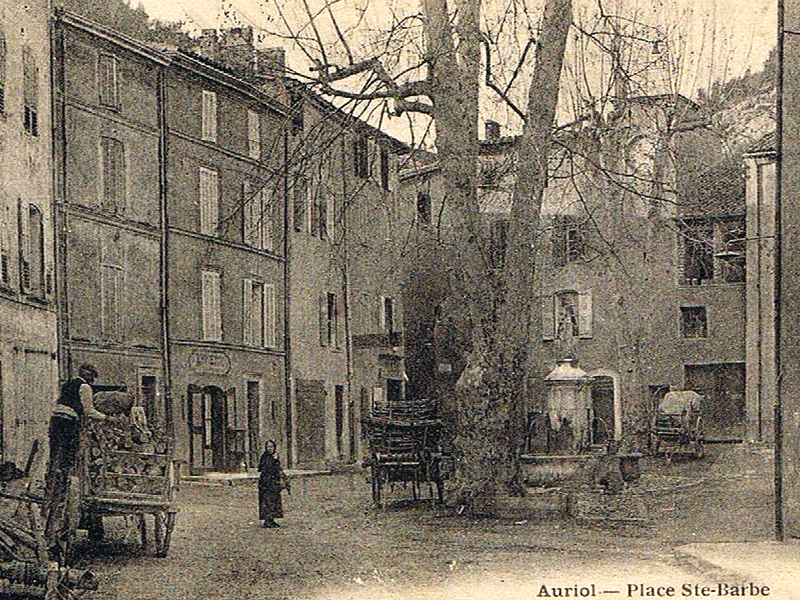
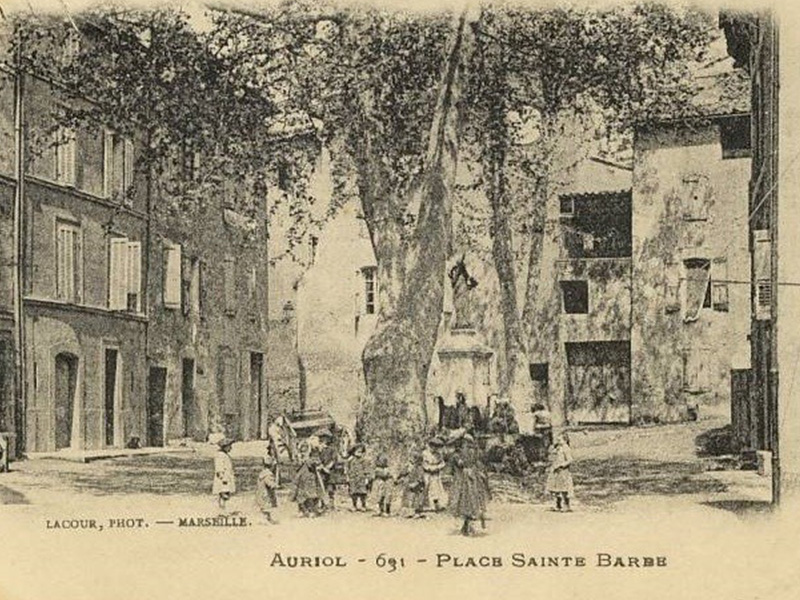
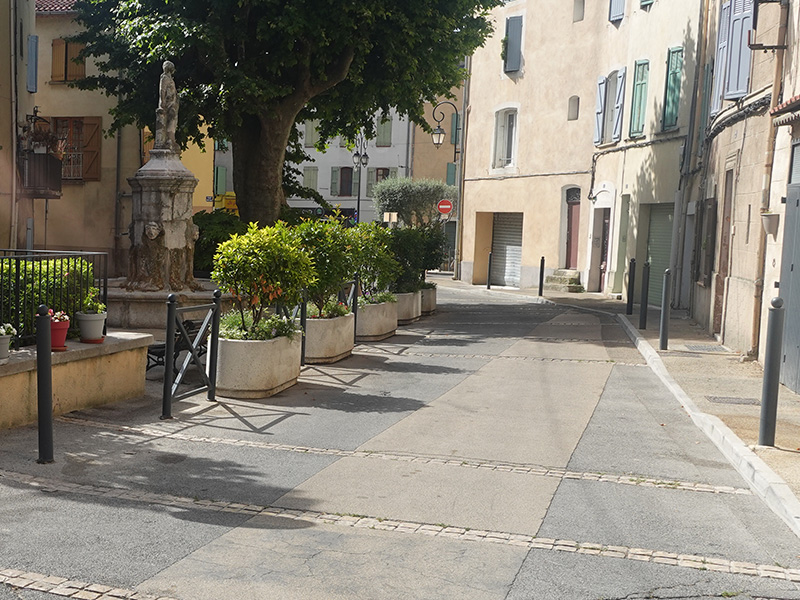

Place Sainte-Barbe
La place Sainte Barbe
The name of the place Sainte Barbe probably comes from that of the patron saint of fireworks and sappers. It is linked to the one for explosives and other ammunition. On the ships of the Royal Navy, Saint Barbe was the isolated place where gunpowder was stored. Auriol never had a gunpowder mill, but paid Louis XIV, as did all the communes upstream from Marseille, for the removal of the mills located on the Huveaune.
The fountain and the river
The namesake fountain placed in its center dates from 1767. Historically, this fountain was used as a basin to supply water to the inhabitants of the neighborhood and water the animals. Since then, this fountain, which includes a basin surmounted by a statue, has become an emblematic part of the Auriolais heritage with its representation of Saint Barbara, patron saint of miners, firemen, firemen and all those involved in fire. Moreover, every year, wreaths are organized by the fire station of Auriol to commemorate her.
The fire station of Auriol is also the patron saint of Saint Barbara
From a cultural point of view, it should be noted that this square was made famous in 1954 by Marcel Pagnol on the occasion of the filming of the movie "The Great War";le secret de Maître Cornille, an adaptation of one of Alfonse Daudet's Lettres de mon moulin. Located in the heart of the old and historic center of Auriol, two steps from the Martin-Duby municipal museum and its belfry, the Place Sainte-Barbe is an obligatory passage for the tourist circuits organized in the territory.