Their story.
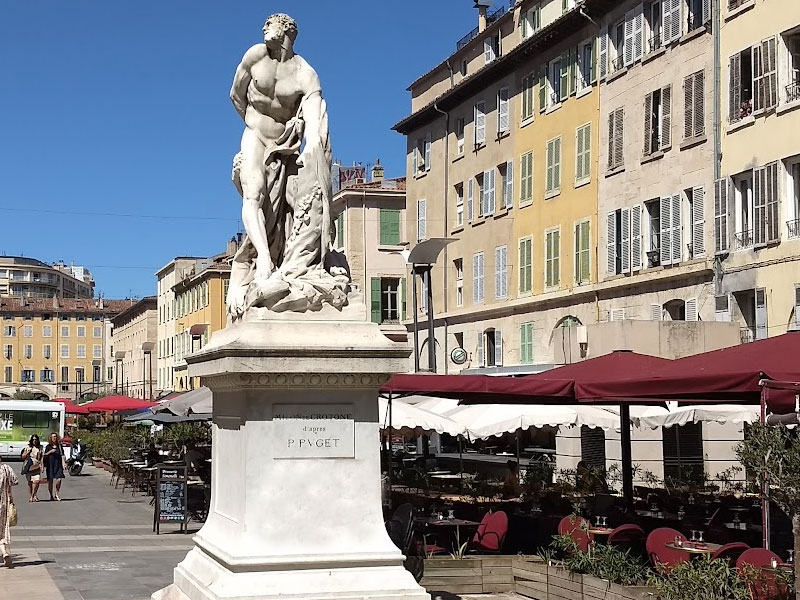
The Milon of Crotone is a marble group made between 1671 and 1682 by the sculptor Pierre Puget à Toulon on commission of Jean-Baptiste Colbert and à destination of the château de Versailles. The work is currently preserved in Paris at the Louvre museum.
The statue of Pierre Puget is a work of art
The statue by Pierre Puget illustrates the death of the Greek athlete Milon of Crotone in the sixth century BC. The athlete is represented at the moment when the lion plants its claws and fangs in his leg. The wrestler, champion of the Olympian games and symbol of ubris (for having imagined he could tear down the tree that holds him back with his bare hands) and of the vanity of human effort since he cannot escape his destiny, then stiffens with pain. The legend originally speaks of a wolf having devoured Milon of Crotone. Here he is represented by a lion, an animal considered more noble and powerful.
The wolf is a wolf, a lion, a lion, a lion
The work, as is often the case with Pierre Puget, is constructed along strong diagonals. One is marked here in the legs of the wrestler à which come to react those of the tree trunk and the drapery. We find the work on textures that has made the success of the artist.
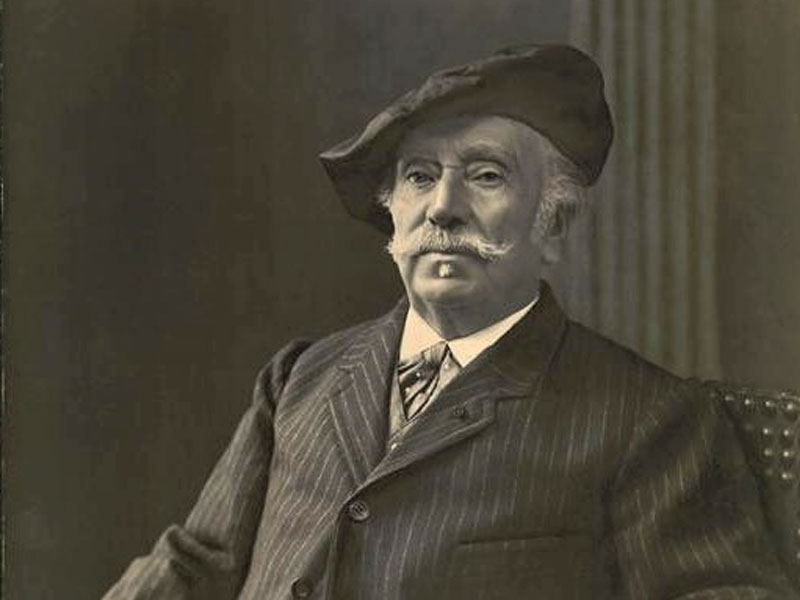
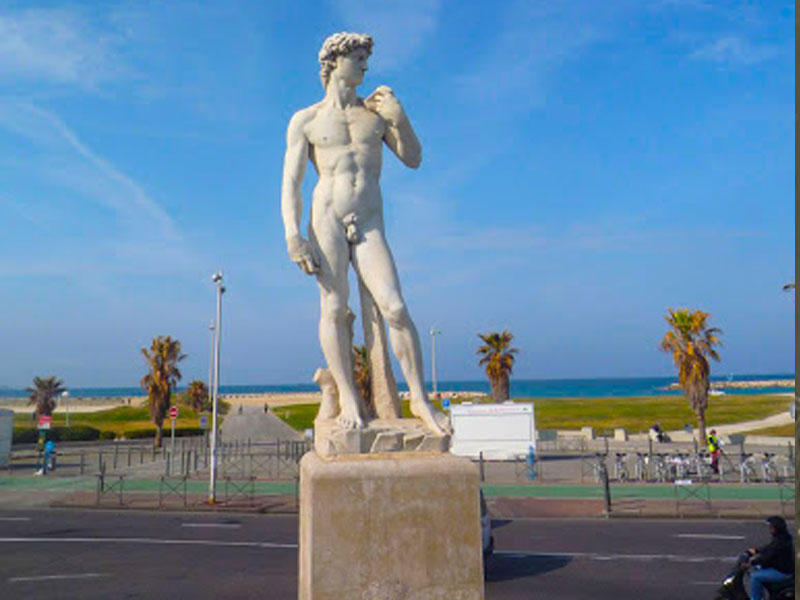
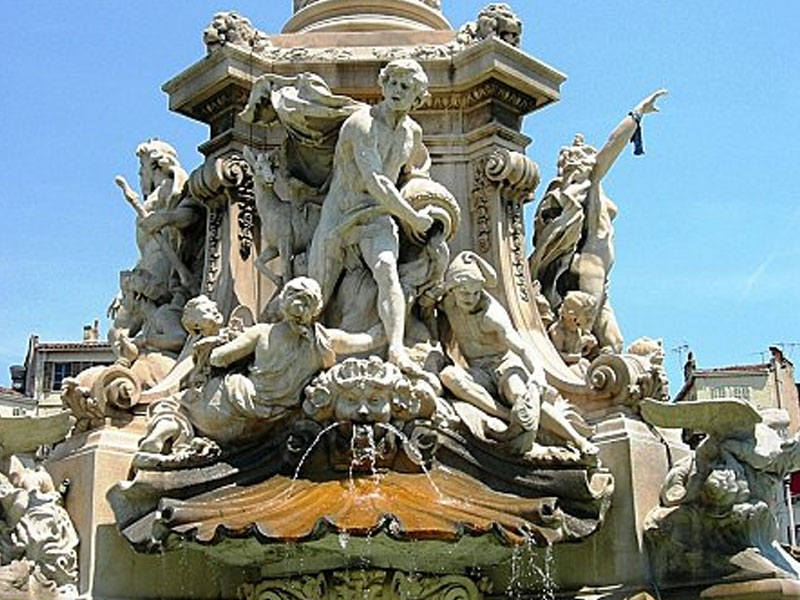
The copy was donated by Jules Cantini, a French sculptor, marble maker and mason. In 1911, he also offered the city the fountain of the Place Castellane, which his friend André-Joseph Allar realized after his drawings. We also owe from his workshops a copy of the statue of David after Michelangelo, made in 1949 at the roundabout of the Prado beach.

Vos impressions.
Partagez votre ressenti sur cette plaque — les messages sont relus avant publication.
Ouvrez votre carnet de visite pour laisser un commentaire.
Mon carnet de visiteAucun commentaire pour le moment. Soyez le premier !